The History of the Nickname… but why care about Nashville’s history at all?
Look at it this way: you’re interested in Nashville as a vacation hotspot or hometown, and a town famously known as “Music City.” If it were any other random city, there really wouldn’t be reason to care about its history. But since you’re considering the Music City, you might be looking to Nashville because you think it has opportunity for you that you don’t have in your own city.
You’re simply curious about it, and your curiosity of your new (famous) potential vacation destination or home might come from the starting question, “Why is Nashville called ‘Music City?’”
-
Ever wonder why New York City is the “city that never sleeps”? In the 1880s the nickname started, but in 1898, Jacob Riis (a photographer) referred to a neighborhood in NYC as “The Bowery never sleeps.” From then, the nickname became popular in the 1900s when newspapers started referring to NYC as the “never sleeps” nickname because it had an evening mail service and electric and gas lighting. (As you can see, NYC was way behind the nickname city game compared to Nashville.)
Frank Sinatra then made the name popular in 1980 with “Theme from New York, New York.” Everyone understands New York a little more with this nickname because it communicates what New York’s about: working (or goofing off) around the clock.
Similar to NYC, Nashville didn’t name itself “Music City,” someone else did. Nashville’s nickname was born in the 1700s when the first settlers arrived with “fiddle tunes” to celebrate reaching the Cumberland River. Nashville also owes being the iconic country music hub it is today to the fiddle players because it was one of the first areas in the US to celebrate fiddle music. (See? Country music has always been ingrained in Nashville).
-
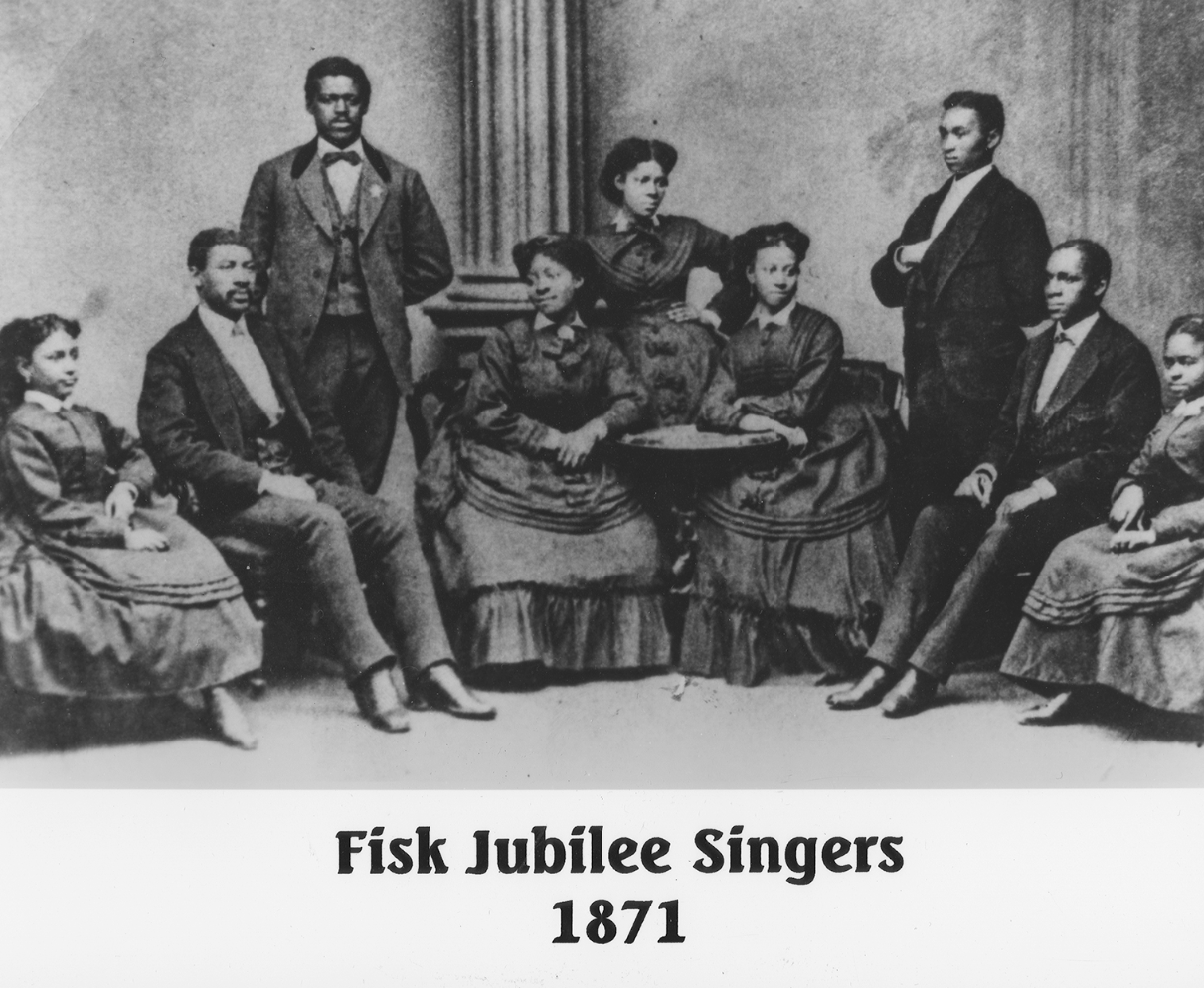
In the 1800s, the Fisk Jubilee Singers solidified Nashville’s “Music City” nickname. The Fisk Jubilee Singers came from Fisk University, a private black university in Nashville. The Singers went on "around-the-world tours" to fund the school's mission of educating people who were enslaved during the Civil War.
Their tour caught the eye of the Queen of England, Queen Victoria, and she declared the Jubilee Singers must've come from a "music city." Like Riis and Sinatra, Queen Victoria couldn’t ignore a unique characteristic in a city; Nashville was inherently musical, so it was only fitting to dub it “Music City.”
-
To celebrate Nashville’s iconic music, the Grand Ole Opry started broadcasting fiddle music (or country music) in 1925 on Nashville’s local radio station, WSM. It’s then radio DJs began referring to Nashville as “Music City”; the nickname was “catching on.” In the 1950s, a radio DJ, David Cobb, referred to Nashville as "Music City USA" which is the nickname that became "mainstream" and well-known as it was broadcast on the radio for everyone to hear.
Even though “Music City USA” became a popular nickname for the city, it was changed back to “Music City” in the 2000s by the Nashville Convention and Visitors Corporation (NCVC) because they wanted to market Nashville as the only "music city" in the world, not just the USA.